
Buffalo coalition, producers urge Gov. Hochul to pass Good Food NY bill
Ben Tsujimoto
A bill that passed the State Legislature in June could tilt the competitive landscape favorably for small local food producers to serve public institutions.
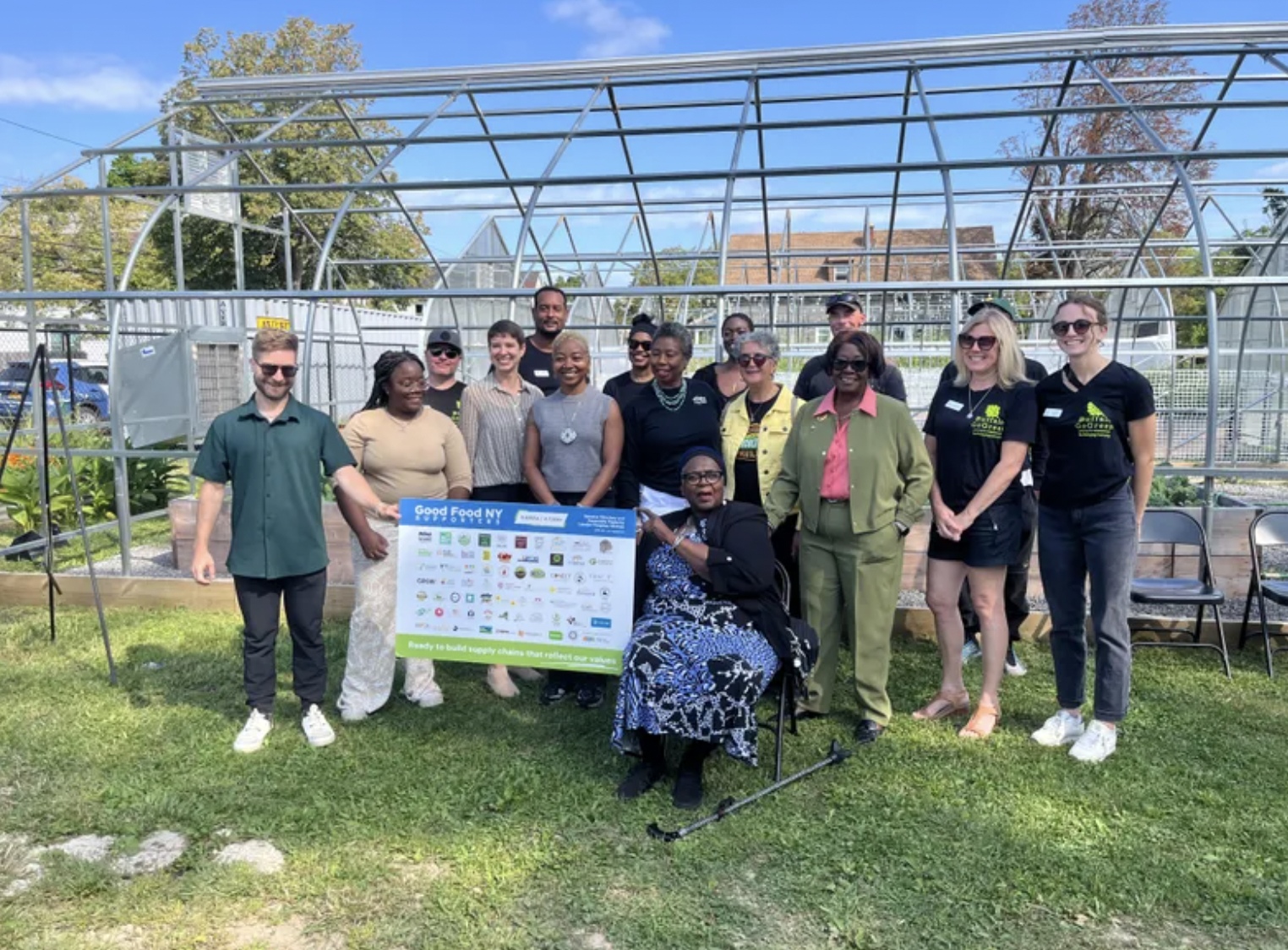
Passage of the Good Food NY bill is urgent, said Jessica Gilbert-Overland, co-founder of the Good Food Buffalo Coalition, a bountiful local branch that includes small Western New York farmers, advocacy organizations, local unions and education institutions. It’s part of a national effort called the Good Food Purchasing Program.
“We could set a standard and be a leader in procurement across the country,” Gilbert-Overland said Friday. “That’s really exciting.”
The window for the bill to be signed by Gov. Kathy Hochul closes at the end of December, however. The bill ran out of time last year, passing only the Senate.
Good Food NY would give public institutions such as Buffalo Public Schools and Erie County Medical Center an option rather than a mandate for how they purchase their food. New York’s longstanding General Municipal Law 103 rewards the “lowest responsible bidder” on any contract proposal. The setup has put local growers at a disadvantage because national suppliers, such as U.S. Foods or Sysco, can offer goods at a cheaper rate and still profit overall.
Local producers’ “hands are tied by the current mandate,” Gilbert-Overland said.
Good Food NY, however, would allow public institutions to consider values-based procurement. Instead of being restricted to only the most affordable option, they could pick a slightly more expensive bid if it meets several conditions, such as benefit to the local economy, nutritional value, respect to animal welfare and racial justice, treatment of farm workers and environmental impact. The value-based bid would still need to be within 10% of the lowest responsible bidder.
Allison DeHonney, executive director for Buffalo Go Green and president and CEO of Urban Fruits & Veggies, is among the local producers already fighting against the current to get their products into nearby public institutions. A formal step would be meaningful. “It’s great to have legislation to stand behind us,” she said.
Supply chain disruptions created by the Covid-19 pandemic revealed the importance of robust local economies, Gilbert-Overland said.
Passing the bill “would strengthen the entirety of the local food chain and help it be resilient to external shocks,” she said. Gilbert-Overland credited Assembly Majority Leader Crystal D. Peoples-Stokes with championing the bill.
While Buffalo Schools is paying U.S. Foods $10.5 million for the 2024-2025 school year, the district has for the last decade strived to fill students’ lunch trays with local products. They have participated in the state’s 30% initiative, which offers a significantly higher reimbursement rate on meals with New York food products, and created mini farmers markets in Buffalo Schools’ Saturday Academies through NY Food for NY Families funding.
Even with farm-to-school embedded in the district’s child nutrition program, national distributors still dominate. Recent movement in the Buffalo Schools’ $44 million commissary project means the district should soon have the ability to cook meals from scratch and chill them before delivering to close to 100 school sites. The impact would be muted, however, if Buffalo was restricted to choosing the lowest responsible bidder.
DeHonney, whose Urban Fruits & Veggies is in its second contract with Buffalo Public Schools, said the populations she serves matter.
“We’re focusing on youth and seniors, trying to get them as much healthy food as possible,” she said. DeHonney pointed to aspects of her own farm, such as soil testing and avoiding chemical pesticides, which ensure students receive “really clean, clean products.”
Finding ways to serve the surrounding community is a unifying force, Gilbert-Overland said. “I think they want to be serving our students and their families,” she said. “That’s what drives them, right?”